


University of Lagos
You don’t arrive at the University of Lagos all at once. You discover it.
The campus unfolds gradually—water on one side, city on the other. Set along the Lagos Lagoon, UNILAG feels both grounded and expansive, shaped by stillness and motion at the same time. The pace is unmistakably Lagos, but the space allows room to think, to gather, to become.
Founded in 1962, just after Nigeria’s independence, UNILAG was created with purpose. It was meant to train minds for a new nation and prepare students to lead in a rapidly changing world. Over time, it has done exactly that—producing thinkers, creatives, and leaders whose influence extends far beyond the campus.
Yet for all its cultural weight, one thing has been notably absent: a shared visual language of collegiate identity. Unlike many global universities, UNILAG has never had an official way for students, alumni, or supporters to wear their affiliation with pride. No enduring collegiate uniform. No pieces that quietly signal belonging beyond campus gates.
That absence is what makes this moment important.
Varsity54 was built on the belief that African universities deserve the same visibility, recognition, and cultural presence as their global counterparts. That belief begins here, with UNILAG. The goal is not to manufacture nostalgia, but to introduce a tradition—one rooted in the university’s history and designed for its present reality.
This collection marks the start of that language. Timeless collegiate essentials—tees, sweats, and accessories—designed to feel natural, familiar, and earned. Pieces that students can grow into, alumni can return to, and the wider community can recognize.
UNILAG today is global, connected, and future-facing. Its influence extends well beyond lecture halls, carried by the people who pass through it. This collection exists to make that influence visible—to give form to an identity that has always been there.
By the Numbers
To understand the scale and influence of the University of Lagos, it helps to look at the facts behind the campus.
-
Founded in 1962, UNILAG was established during Nigeria’s early post-independence years, with a mandate to educate and shape a new generation.
-
Home to 50,000+ students, making it one of the largest and most influential universities in Nigeria.
-
Spread across three campuses in Lagos, including the iconic lagoon-front main campus in Yaba.
-
Comprises 12 major faculties and institutes, spanning disciplines from Engineering and Medicine to Arts and Social Sciences.
-
Ranked among the top universities in Nigeria and Africa, and within the top 10% globally by international rankings.
-
Supported by 1,700+ academic staff, contributing to its reputation for research, leadership, and cultural impact.
University of Lagos Campus
UNILAG – The campus architecture
We spent the morning walking around the campus, and this was the first quality that resonated – it is walkable. It’s also more integrated into its urban context – rather than isolated on a remote hilltop like so many other universities in the region. Equally, there are tranquil elements and solitude, especially along the waterfront overlooking the lagoon.
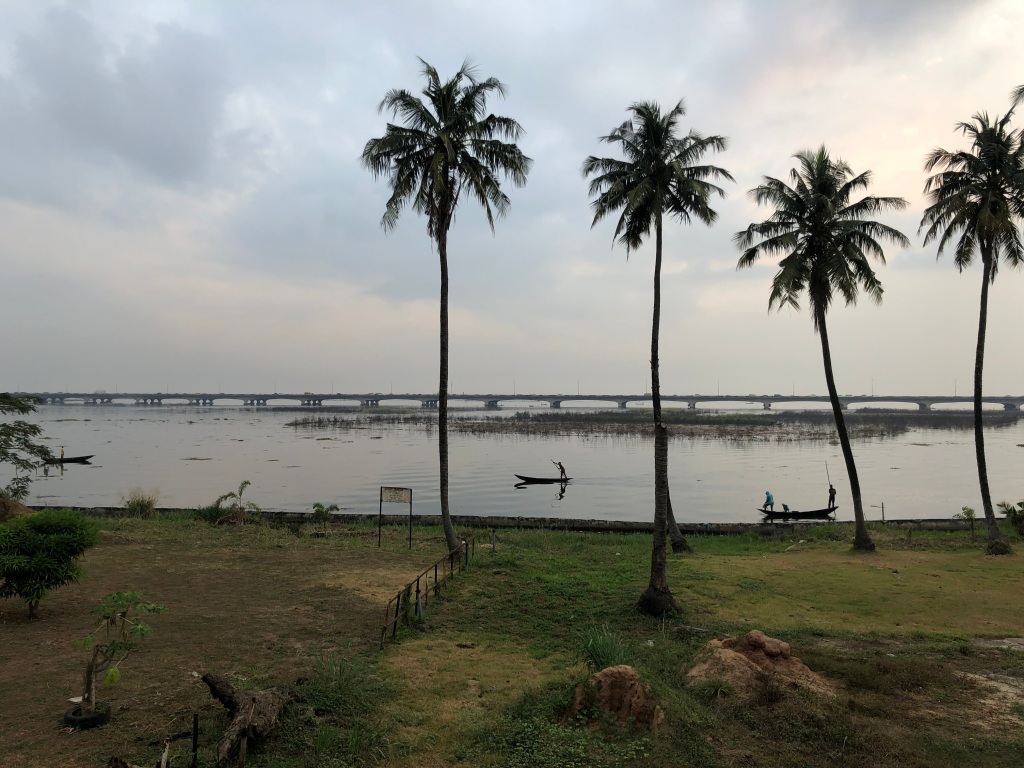


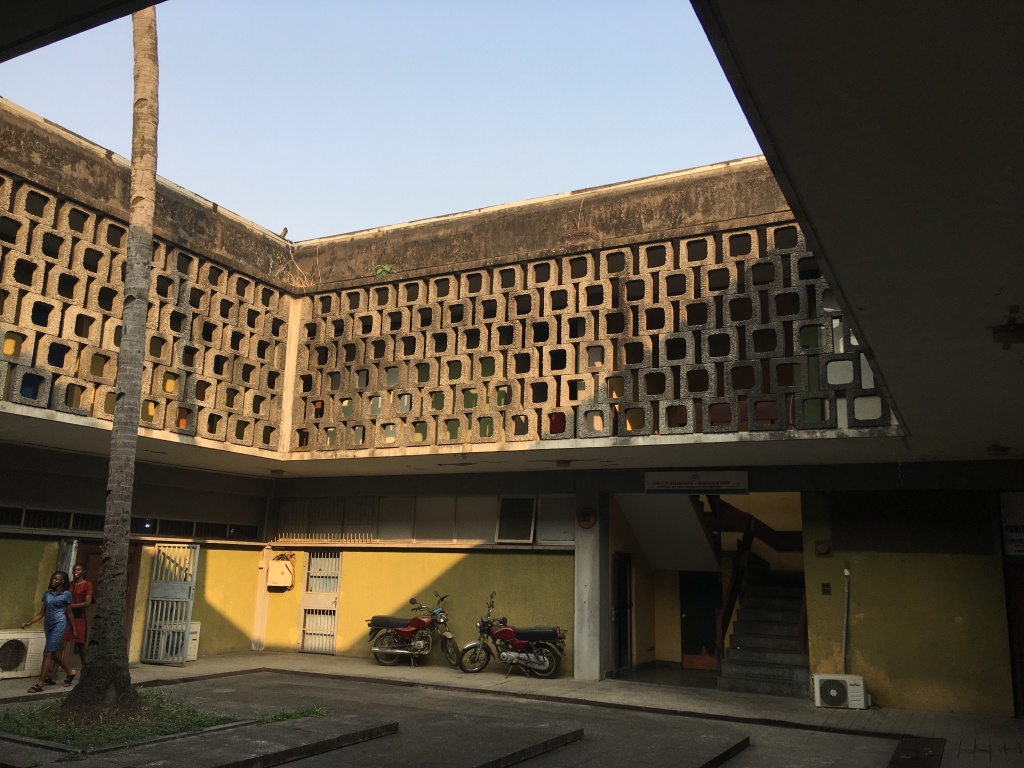

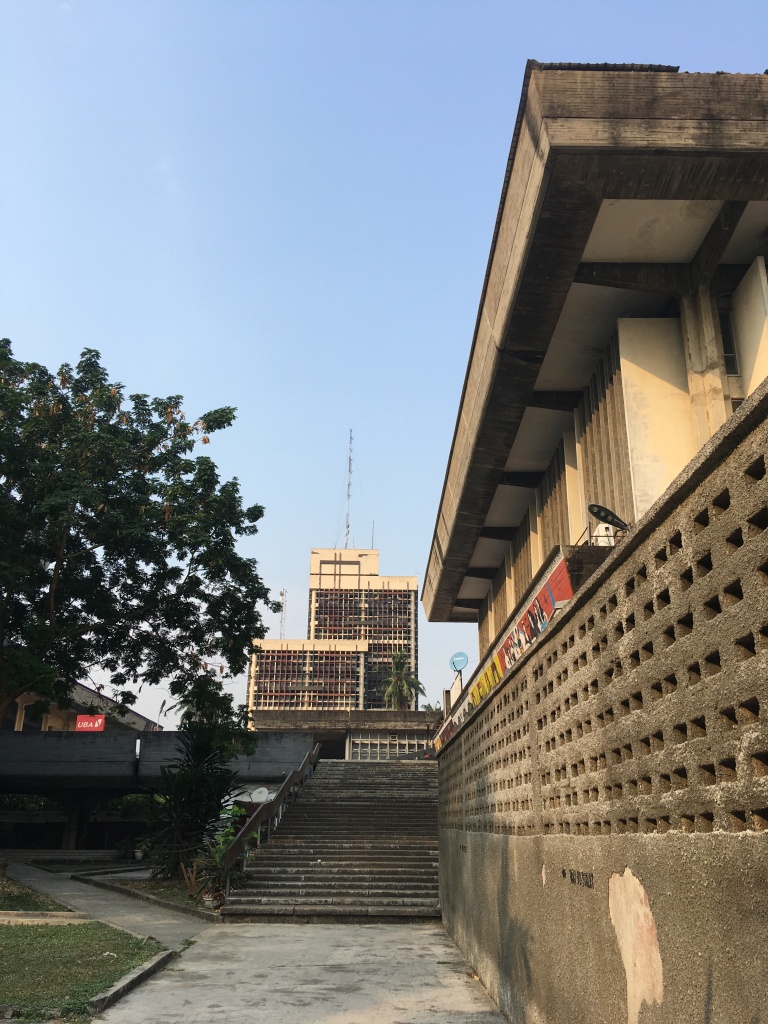
The central core is overlooked by Senate House tower and podiums designed by James Cubitt architects in the 1980s – all of the familiar brise soleil and double-skin façade motifs but extruded, layered, and clad in mosaic tiles. The brise soleil are actually hollow forms with a thin layer of cement and mosaic. There’s the classic Cubitt curved concrete motif (as seen on the Elder Dempster buildings in Lagos and Freetown).
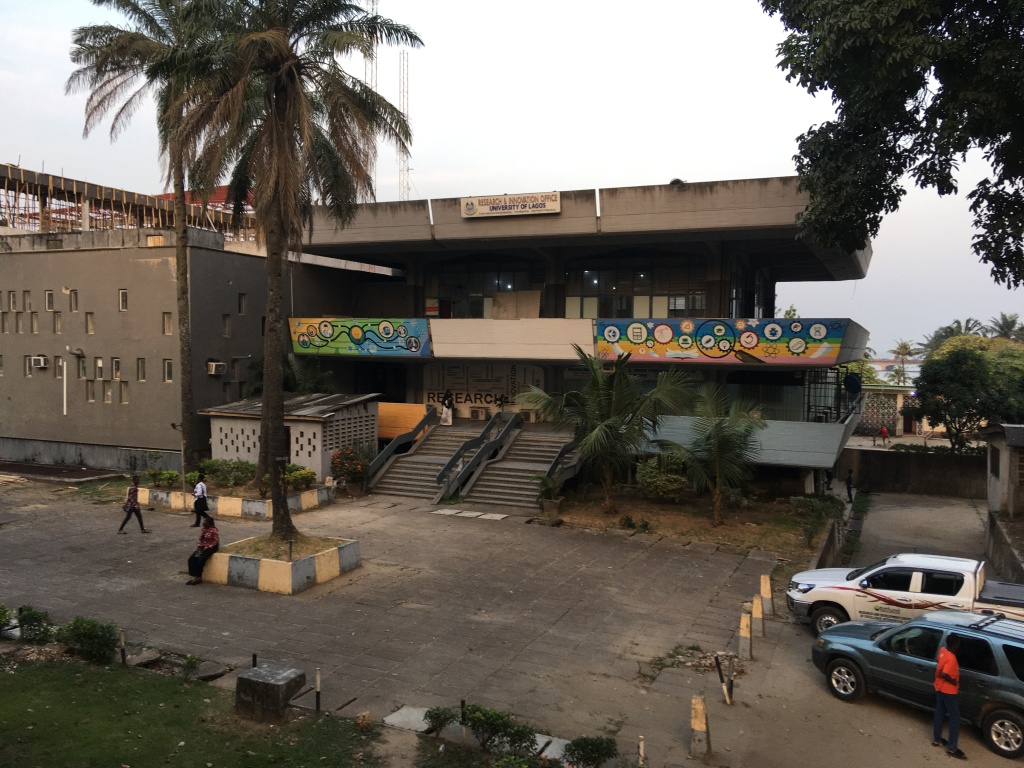
Senate House faces into the plaza-precinct of the university, and here the campus responds to the landscape – both reacting the gradient that leads to the lagoon beyond, and as a man-made series of platforms, routes, and under crofts. It’s a space that has been crafted to catch the lagoon breeze and designed for gatherings, ceremonies, performances, and spending time with friends. The core campus buildings, designed by American practice Robert S. McMillan Associates in the early 1960s, overlook and enclose the space, including the university library and council chamber drum. They’re not forming a street but more of a town square. The administrative buildings are also here, located within a protective shaded courtyard and solitary palm tree. The scale shifts from the large public space into a much more intimate enclosure. The concrete former is expressed on all these buildings to reveal the timber grain, expertly cast into projecting scooped forms, parapets, and balustrades. There’s a heavy, confident, solidity to the composition of the facades. The horizontal soffits of the roofscape frames the visas, respond to the multi-level precinct feel, and are adequately matched with the vertical window bays and concrete fins. The sombre materiality of the ubiquitous concrete is relieved with unexpected blasts of colour, such as the gold mosaic on the J F Ade Ajayi Auditorium.



Images and architecture text by: Transnational Architecture Group
